

Oil-to-Gas Conversion in Bellingham, MA
Conversion handled end to end for Bellingham and MetroWest: the utility hookup, the new equipment, and the old tank's removal.
Hannon Heating & Air Conditioning handles oil-to-gas conversions in Bellingham, MA and the MetroWest towns nearby, from checking whether gas is on your street through equipment installation, tank removal, and startup. We work on both fuels every week, so you get a straight answer on whether converting makes sense for your house at all. We handle conversions in Franklin, Millis, and Medway as well as Bellingham.
The Three Parts of a Conversion
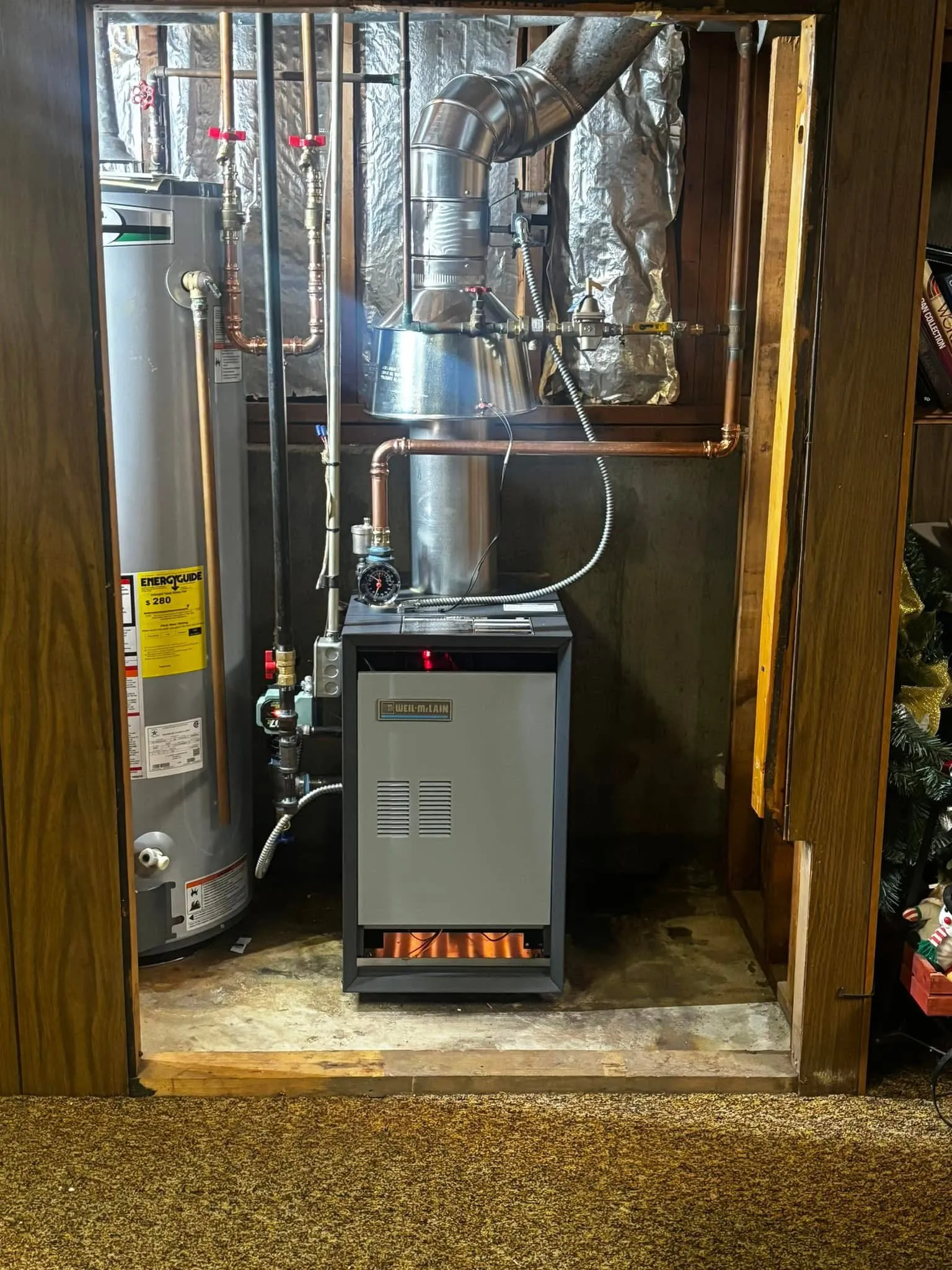
A conversion is really three jobs that have to land in order. First, the utility runs a service line from the main to your house and sets a meter — their crew, their schedule. Second, we install the new gas boiler or furnace and its venting; your radiators, baseboards, or ducts stay put. Third, the oil side gets decommissioned properly: remaining oil pumped out, the tank removed under a fire-department permit, and, in most conversions, a stainless steel liner in the chimney, because gas exhaust condenses in a flue built for oil and eats the masonry. We coordinate all three so you make one call instead of refereeing three schedules.
The service line
The utility runs a line from the main to your house and sets a meter — their crew, their schedule.
The new equipment
We install the new gas boiler or furnace and its venting; radiators, baseboards, or ducts stay put.
The oil side, decommissioned
Remaining oil pumped out, the tank removed under a fire-department permit, and in most conversions a stainless liner in the chimney.
The Honest Timeline: Start in Spring, Not October
Our part of a conversion takes one to three days. The utility's part is the long pole: getting the street connection approved, scheduled, and dug commonly takes weeks, and it stretches longer when everyone else has the same idea in the fall. So the calendar advice is simple — decide in spring or summer, when the utility's queue is short and your heat isn't hostage to it. A conversion begun in October can leave you paying for oil deliveries while you wait on trenching. Since the old tank comes out anyway, oil tank removal rides along under the same permit process we already handle.
Weighing a replacement? The estimate is free.
Call (508) 282-1000 or request an estimate online — you get a written number before any work starts, and nobody gets pressured into a new system.
Is Gas Even on Your Street?
Before anyone spends money, find out whether the main reaches you. Gas availability in the MetroWest towns is street-by-street: one road has a main, the next was never trenched, and a main can stop three houses short of yours. Extending a main is sometimes possible and sometimes prohibitive, and some Massachusetts utilities have paused or slowed new hookups in recent years, which changes the answer by town and by year. We check with the utility as the first step of any conversion conversation, and if the answer is no, we tell you before a single piece of equipment gets quoted — and talk through what actually is available for your house.
Will Converting Actually Save You Money?
A straight answer: much of the saving people attribute to gas really comes from the equipment swap, because conversions typically retire an old low-efficiency oil unit and install 90-plus-percent gas equipment. Fuel pricing is the other half — oil prices swing hard year to year while regulated gas rates move more slowly, and plenty of homeowners convert as much for that predictability as for any single winter's numbers. And if you are weighing a conversion, it is fair to weigh skipping gas entirely: a cold-climate heat pump heats and cools with no fuel line at all, and we install both, so the comparison you get from us is between two jobs we would be equally glad to do. Ask us to run the feasibility check and start with real facts about your street and your system.
Frequently Asked Questions
How long does a conversion take from first call to gas heat running?
Do my radiators, baseboards, or ducts have to change?
How do I find out if gas is available on my street?
What happens to my old oil tank and the oil left in it?
Should I skip gas and go straight to a heat pump instead?
Thinking About the Switch?
Estimates on full system replacements are free — and if keeping oil makes more sense for your house, we'll tell you that too.
Mon-Fri 7am-5pm · Emergency Service Available