

Oil Tank Replacement & Removal in Bellingham, MA
Roth-certified double-wall tank installation and old-tank removal, with the fire-department permit and disposal paperwork handled.
Hannon Heating & Air Conditioning is Roth certified for oil tank replacement in Bellingham, MA and across MetroWest: we install Roth double-wall tanks, remove old steel tanks, and handle the fire-department permit and disposal paperwork ourselves. Your usable oil gets pumped over to the new tank, and most replacements finish in one day. We replace tanks in Uxbridge, Mendon, and Wrentham as well as Bellingham.
Why We Install Roth Double-Wall Tanks
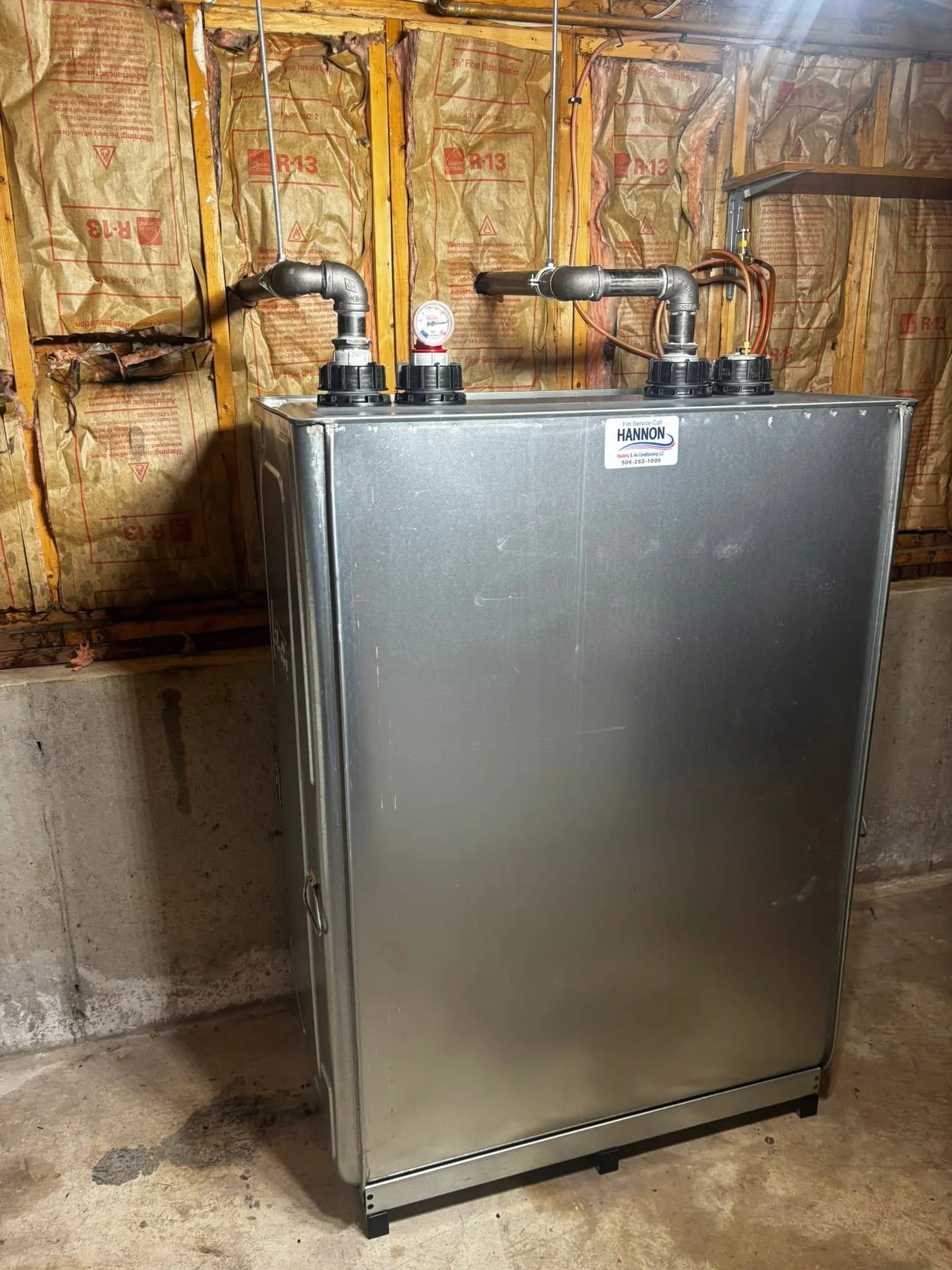
A Roth tank is two tanks in one: a one-piece polyethylene inner tank with no seams to fail, inside a steel outer shell built to contain a leak instead of letting it reach your basement floor. Rust is what kills steel tanks, and it starts on the inside — a poly inner tank has nothing to corrode. Roth backs these tanks with a 30-year warranty through its certified installers, which is why the certification matters and why we carry it. The tanks are also compact and light enough to fit basements and utility rooms an old steel 275 never could.
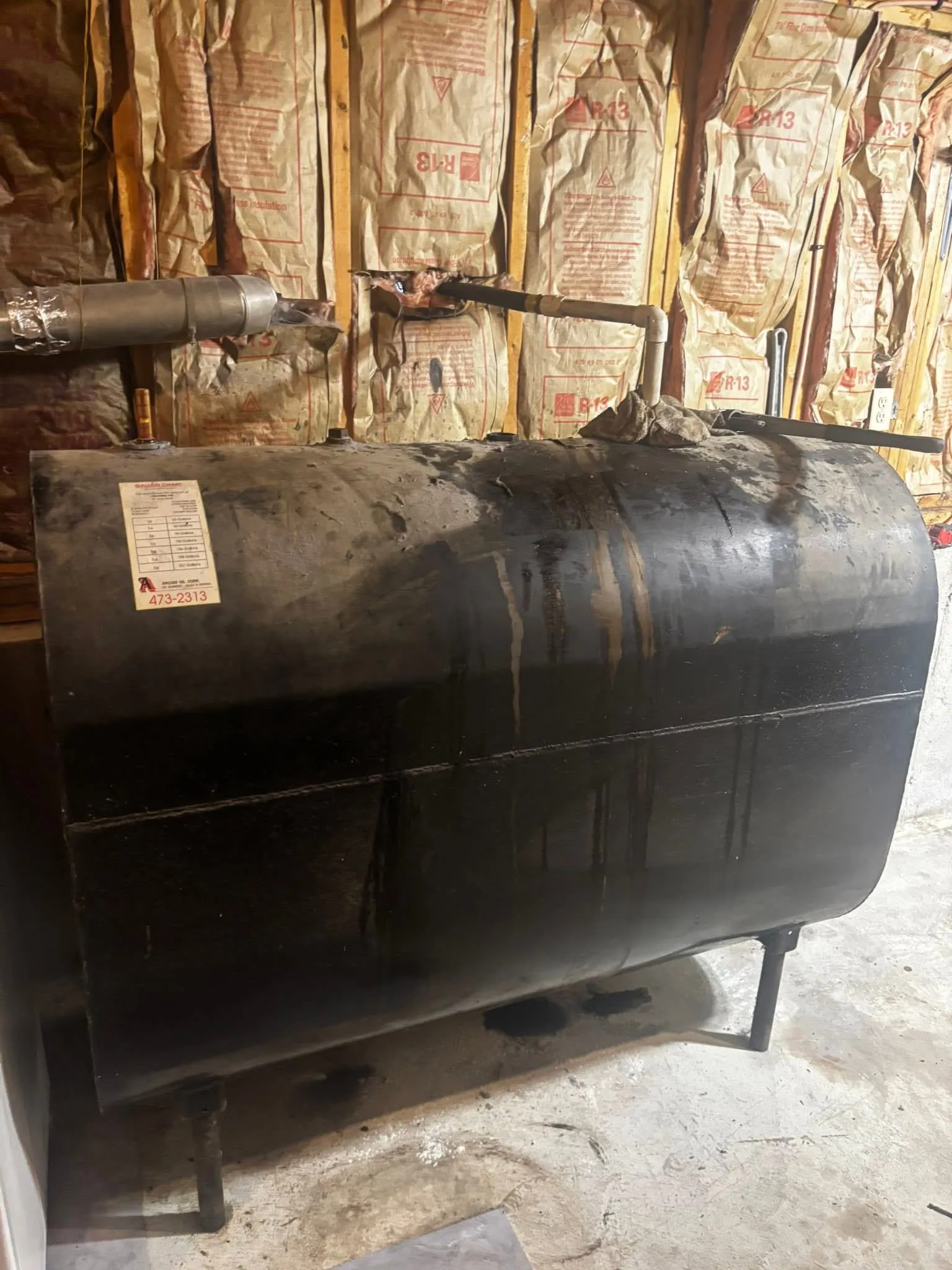
Steel Tanks Rust From the Inside Out
The dangerous thing about an aging steel tank is that it hides its condition. Condensation collects inside, settles under the oil, and corrodes the steel from the inside, so a tank can look clean and painted while its floor is nearly gone. By the time the outside shows evidence, the tank is already failing.
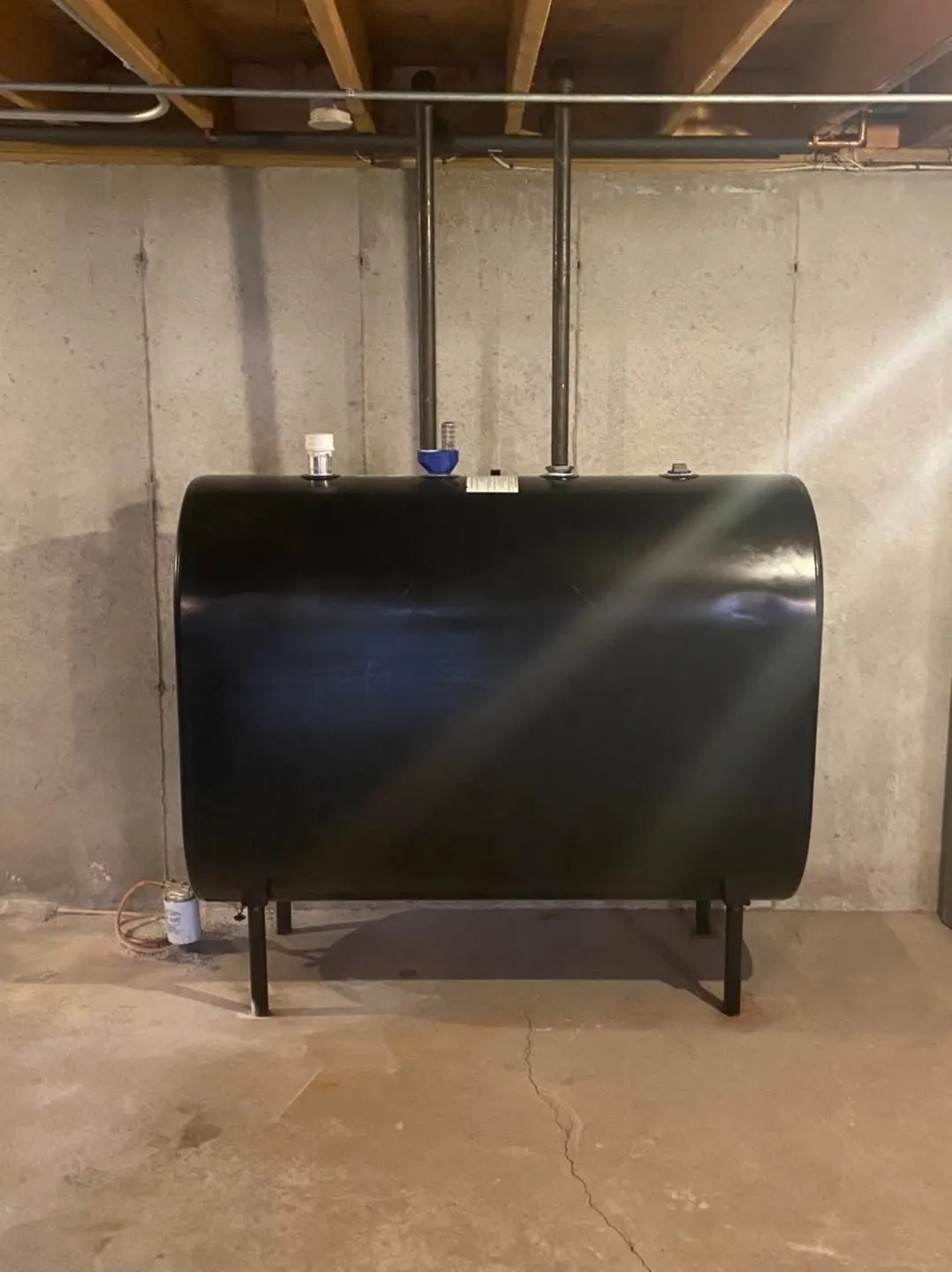
Take these signs seriously:
- A weep or dark stain at the bottom seam
- Wet spots or blisters on the underside
- Heavy rust at the seams or legs
- Legs that are bent or sinking
- An oil smell near the tank
A 25-year-old tank deserves a hard look on age alone, whatever its paint says. If the burner side of the system is aging too, we handle oil burner service on the same visit.
Check Your Insurance Before You Need It
Here is the part almost nobody knows: a standard Massachusetts homeowners policy does not cover a heating-oil release unless you have added the optional oil-spill rider that insurers have been required to offer since 2010. The rider exists because cleanup from a leaked tank can be financially devastating — contaminated soil does not stay put, and remediation is a scale of expense nobody budgets for. A double-wall tank is the other half of the protection, because it contains the leak the rider would otherwise pay to clean up.
The fix costs one phone call: ask your insurance agent whether your policy carries fuel-release coverage, and if it doesn't, ask what adding it takes. Do that this week whether or not you ever call us.
Weighing a replacement? The estimate is free.
Call (508) 282-1000 or request an estimate online — you get a written number before any work starts, and nobody gets pressured into a new system.
What Replacement Day Looks Like
One day, start to finish, for a typical basement tank. We pump the usable oil out of the old tank rather than wasting it, disconnect and remove the tank, and set the new Roth with new fill and vent lines, a new filter, a gauge, and a vent whistle so deliveries fill safely. The old tank leaves for proper disposal with the paperwork to prove it. Massachusetts handles oil tank work through the local fire department, with a permit and an inspection, and we file and schedule that ourselves. You keep the receipts and the permit record, which matter more than most people expect.
Selling the House? Deal With the Tank First
Old and abandoned oil tanks surface at the worst possible moment: during a sale. Home inspectors flag aging tanks, buyers' attorneys ask for removal documentation on any tank that was taken out, and lenders and insurers balk at a property with unknown tank history, so a deal can stall over a tank that was "always fine." Replacing a failing tank, or properly removing a dead one with permits and disposal receipts, costs far less before listing than in a renegotiation at closing. If the plan is to leave oil entirely, an oil-to-gas conversion removes the tank as part of the job. Either way, schedule a tank inspection and know what you're standing on.
Frequently Asked Questions
How do I know my oil tank is due for replacement?
My tank looks fine — can it still be about to fail?
Will homeowners insurance cover a leak?
Why Roth double-wall tanks instead of standard steel?
Do I need a permit to remove or install an oil tank in Massachusetts?
Not Sure What Your Tank Is Worth Trusting?
Schedule an inspection or a straight replacement quote — estimates on replacements are free, and the permit and disposal paperwork is handled.
Mon-Fri 7am-5pm · Emergency Service Available