

Heating Tune-Ups & Maintenance in Bellingham, MA
Annual tune-ups for gas and oil furnaces and boilers — one visit, a published checklist, and a combustion test with real numbers.
Hannon Heating & Air Conditioning runs annual heating tune-ups in Bellingham, MA and across MetroWest — gas and oil furnaces and boilers alike. One visit, a published checklist, and a combustion test with real measured numbers, best booked before the season starts. Most January no-heat calls we run trace back to maintenance that got skipped. We run tune-ups in Plainville, Wrentham, and Blackstone as well as Bellingham.
Is a Tune-Up Worth It, or Just a Way In the Door?
Fair question, because cheap "tune-up specials" are often exactly that: a quick look, a filter, and a hard pitch for repairs you can't verify. Ours works differently. The visit has a fixed scope (the checklist below is the whole job), and our repair-first policy means anything we find comes back to you as a plain finding and a written quote you are free to decline. As for whether maintenance matters, the pattern answers it: the majority of winter no-heat calls we run are failures a tune-up catches early — a flame sensor that finally quit, a filter that starved the furnace, a nozzle that clogged. You book the visit once a year, and there is nothing to join and nothing recurring to sign.
What's on the Checklist
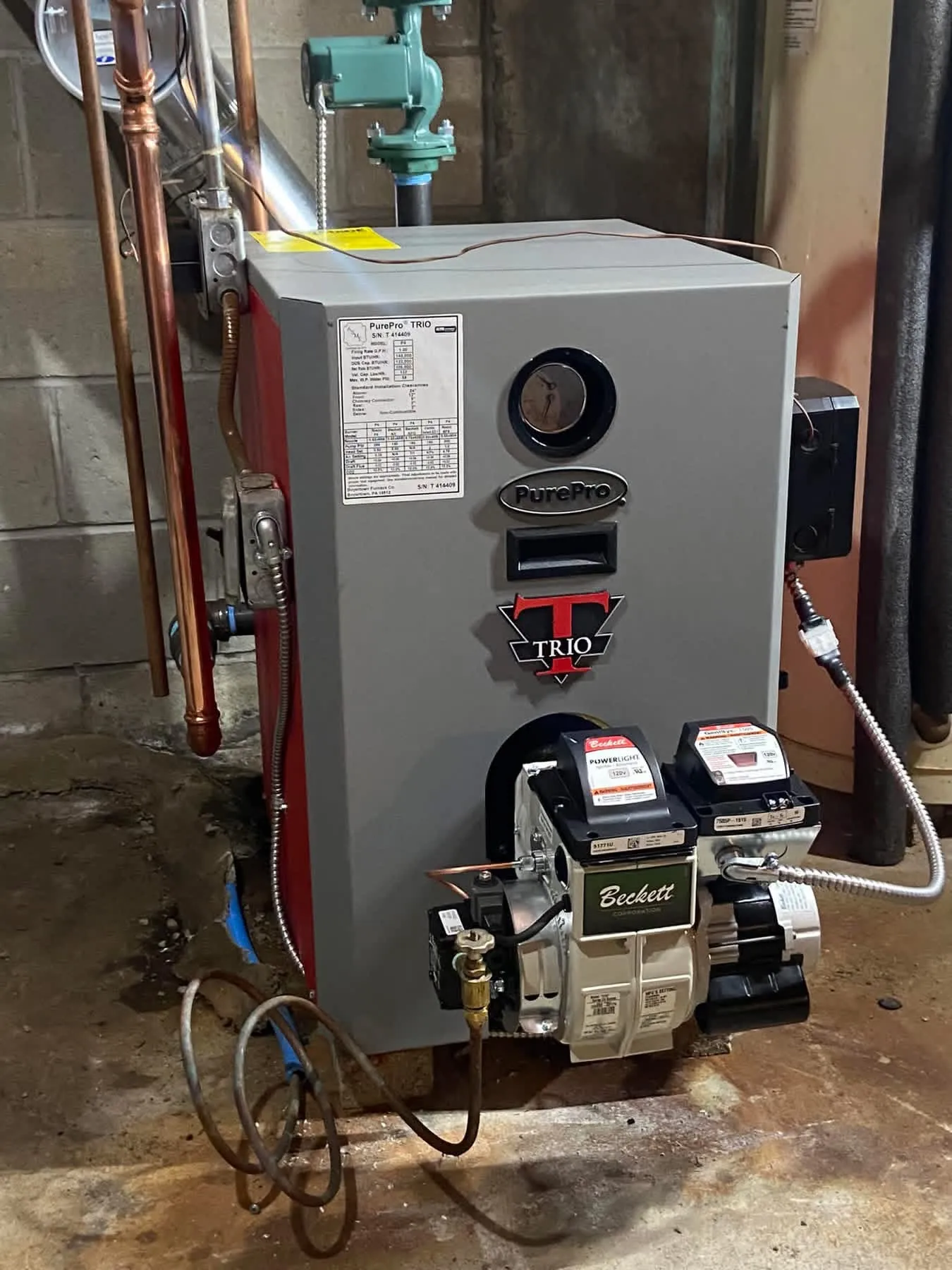
Every tune-up covers the same ground, gas or oil, furnace or boiler. Burners cleaned and inspected. Heat exchanger checked for cracks and soot. Flue and draft verified, because a blocked or back-drafting flue is a carbon monoxide problem before it is a heating problem. Safety controls and limit switches tested. Filter replaced on furnaces; on oil equipment, the nozzle, oil filter, and pump strainer are replaced as part of the deeper oil burner cleaning that oil systems get. And the part most drive-by tune-ups skip: a combustion analyzer test, with measured efficiency, smoke, and draft numbers, so the burner leaves tuned to spec instead of eyeballed.
- Burners: cleaned and inspected.
- Heat exchanger: checked for cracks and soot.
- Flue and draft: verified.
- Safety controls and limit switches: tested.
- Filter: replaced on furnaces; on oil equipment, the nozzle, oil filter, and pump strainer are replaced.
- Combustion analyzer test: measured efficiency, smoke, and draft numbers.
Oil Every Year, Gas Every Year, for Different Reasons
Oil equipment needs annual service without exception: oil combustion leaves soot that insulates the heat exchanger, chokes efficiency, and builds toward lockouts and puff-backs, so a skipped year has a visible cost. Gas burns cleaner, which tempts people to skip, but gas furnaces fail in their own patterns (dirty flame sensors, cracked igniters, clogged condensate lines on high-efficiency models), and a cracked heat exchanger on any fuel is a carbon monoxide risk that only an inspection catches. The tune-up also protects your warranty, since most manufacturers require documented annual professional maintenance to keep it valid. When a visit does turn up a real fault, furnace repair is the same van and often the same appointment.
When to Book, and What You Can Do Yourself
Late summer or early fall is the smart window: the schedule is open, and any fault we find gets fixed before you need the heat, while mid-winter calendars fill with emergencies. Between visits, the homeowner jobs are real and worth doing — swap the filter when it is dirty and check it monthly in winter, keep baseboards, vents, and returns clear of furniture, put fresh batteries in the thermostat each fall, glance at the oil gauge before it surprises you, and press the test button on your CO detectors. None of that replaces the combustion test and safety inspection, but it covers the months in between well. Book your tune-up in September and the first cold night is just a cold night.
Frequently Asked Questions
Is an annual tune-up really worth it, or just a way to sell repairs?
How often does each kind of heating system need service?
When's the smart time of year to book a tune-up?
Can skipping service void my equipment warranty?
What can I handle myself between visits?
Get on the Schedule Before the Season
A tune-up costs less than the repair it prevents — call and get on the calendar before the busy season fills it.
Mon-Fri 7am-5pm · Emergency Service Available